PickSavio

How to Cut Your Grocery Bill and Still Eat Healthy (+ a $70 Healthy Grocery List on a Budget)
#ad This post contains affiliate links, marked #ad. PickSavio may earn a commission at no extra cost to you. Details at the end.
It's easy to believe that eating well means spending more. But the cheapest foods in the store are often some of the most useful ones: oats, beans, eggs, rice, cabbage, carrots, bananas and frozen vegetables.
So cutting your grocery bill and still eating healthy isn't about buying fancy food on sale. It's about building your week around simple, low-cost staples and wasting less of what you buy.
This guide covers the habits that matter most, a sample healthy grocery list on a budget (about $70 for a week for two), and ideas for busy weeks when you don't want to cook.
Quick answer
To cut your grocery bill and still eat healthy, build meals around cheap whole foods (beans, lentils, eggs, oats, rice, potatoes, seasonal and frozen produce), plan 4–5 dinners that share ingredients, buy store brands at a discount grocer, and use leftovers for lunch. Skip pre-cut, pre-packed and "health" branded versions of foods you can make yourself, and use your freezer so nothing goes to waste.
Free: the Before You Buy checklist
A short printable list of things to check before you shop or hit “checkout,” so you only pay for what you actually need. It’s free and comes by email.
#ad The sign-up page also introduces Nexus Rewards, a savings membership. Details at the end of this post.
How to save money on food and eat healthy: the basics

Plan first, then shop
Pick four or five dinners before you go to the store, check your fridge and pantry, then write the list from those meals. A plan stops the trips that end with takeout.
Make plants do the heavy lifting
Beans, lentils and chickpeas are some of the cheapest sources of protein and fiber you can buy. You don't have to go vegetarian. Swapping half the meat in chili, tacos or pasta sauce for beans or lentils stretches each meal and lowers the cost per serving.
Frozen and canned count
Frozen vegetables and fruit don't wilt in the drawer and are often cheaper than fresh. Canned beans, tomatoes and fish are handy too; pick low-sodium cans when you can, or rinse beans before using.
Buy whole, not pre-cut
A whole head of cabbage, a bag of carrots or a block of cheese costs far less than the shredded, sliced or snack-pack versions. Five minutes of chopping on a Sunday saves real money.
Shop the discount grocers and store brands
Aldi, Walmart, Lidl, WinCo and Save A Lot are usually cheaper for basics. Store-brand oats, rice, frozen veg, canned beans and yogurt are generally just as good as name brands. To compare stores and deals more easily, the Nexus Grocery Pro app in Nexus Rewards #ad (free account to explore, full benefits $9.95/month) is one tool to try; Nexus says it helps you make smarter decisions wherever you shop.
Watch drinks and snacks
Soda, juice, chips and granola bars add up fast without making meals. Tap water, popcorn and fruit are cheaper swaps.
Cook once, eat twice
Make enough dinner for lunch the next day. It's the simplest way to stop paying for lunches out, and you only clean the kitchen once.
If you're shopping only for yourself, our guide on how to save money on groceries for one person has a $40 weekly list and single-serving tips.
Cheap healthy staples worth buying every week
These are the foods that give you the most meals for the least money:
- Oats – breakfast for weeks for a few dollars
- Eggs – quick protein for any meal
- Dried lentils and canned or dried beans – protein and fiber for soups, tacos, bowls
- Brown rice and whole wheat pasta – filling, cheap bases
- Potatoes and sweet potatoes – bake, roast or mash
- Cabbage, carrots and onions – last for weeks in the fridge
- Bananas and apples – among the cheapest fresh fruit in most stores
- Frozen broccoli, mixed vegetables and berries – no waste
- Canned tomatoes – the base of soups, chili and pasta sauce
- Peanut butter – protein and an easy snack
- Plain yogurt (big tub) – cheaper than single cups; add your own fruit
- Canned tuna or chicken thighs – budget-friendly animal protein
Sample healthy grocery list on a budget (about $70 for two people)
Prices below are approximate, based on typical US discount-grocer and store-brand prices. They vary a lot by store and region, so use them as a guide, not a promise. This list assumes you already have oil, salt, pepper and a few spices.
Proteins
- 18 eggs – about $4.50
- 3 lb chicken thighs – about $6
- 1 lb dried lentils – about $1.50
- 2 cans black beans – about $2
- 2 cans tuna – about $2.50
- 16 oz peanut butter – about $2.50
Grains
- Old-fashioned oats (42 oz) – about $4
- Brown rice (2 lb) – about $2.50
- Whole wheat bread – about $2.50
- Whole wheat pasta (1 lb) – about $1.50
Produce
- 6 bananas – about $1.50
- 3 lb bag of apples – about $4
- 2 lb bag of carrots – about $1.50
- 3 lb bag of onions – about $3
- 1 head of garlic – about $0.75
- 1 head of cabbage – about $2
- 3 lb sweet potatoes – about $3.50
- 1 bag spinach – about $2.50
Frozen and canned
- 2 bags frozen broccoli – about $3
- 1 bag frozen mixed vegetables – about $1.50
- 1 bag frozen mixed berries – about $3.50
- 2 cans diced tomatoes – about $2
Dairy
- 1 gallon milk – about $3.50
- 32 oz plain yogurt – about $3
- 8 oz block of cheese – about $2.50
Rough total: about $67–70
Oats, rice, lentils, onions and peanut butter will carry over into next week, so your second week should cost less.
What this list makes
- Breakfasts: oatmeal with banana and berries, yogurt with fruit, or eggs on toast
- Lunches: leftovers, tuna sandwiches with carrot sticks, or bean and rice bowls
- Dinners:
- Lentil, carrot and tomato soup with toast
- Roast chicken thighs with sweet potatoes and broccoli
- Black bean and sweet potato tacos or bowls with cabbage slaw
- Whole wheat pasta with tomato sauce, spinach and a little cheese
- Cabbage, egg and vegetable fried rice (a great "use it up" meal)
- Snacks: apples with peanut butter, carrots, yogurt
Feeding more people? Our guide on the cheapest way to feed a family of 4 has a full 7-day meal plan you can mix with this list.
How to eat healthy on a budget without cooking
Some weeks you just won't cook, and that's fine. Cheap no-cook options beat takeout every time:
- Overnight oats: oats, milk and yogurt in a jar with berries. Make three at once.
- Tuna or bean salad: canned tuna or rinsed beans with chopped onion, a squeeze of lemon and oil, eaten on bread or crackers.
- Peanut butter and banana wraps: quick, filling and cheap.
- Snack plates: cheese, apple slices, carrots and whole wheat crackers.
- Store shortcuts that are still good value: a rotisserie chicken, a bag of salad and microwave rice can cover two or three meals for less than one takeout order.
How to eat healthy on a budget with a busy schedule
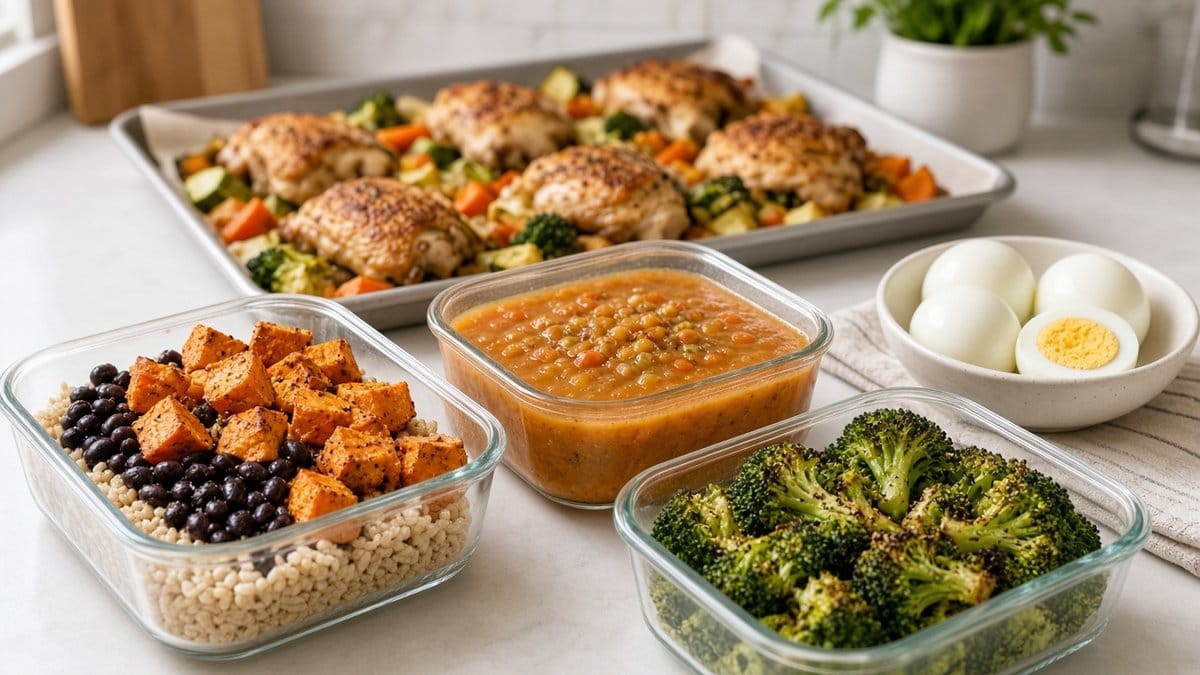
Busy weeks are when budgets break. A little prep helps:
- Do one 30–45 minute prep session. Cook a pot of rice, roast a tray of vegetables and hard-boil some eggs.
- Use "building block" meals. Rice + beans + any vegetable + a sauce makes a bowl in five minutes.
- Keep a backup freezer meal. A bag of frozen veg, a portion of frozen soup or a homemade burrito saves you from ordering in.
- Lean on one-pan dinners. Chicken thighs, sweet potatoes and broccoli on one sheet pan, then into the oven.
How to eat healthy on a budget with picky eaters
Picky eaters can make healthy food feel like wasted money. A few tactics help:
- Serve "build your own" meals like tacos, bowls or wraps, so everyone picks their own toppings.
- Add vegetables where they blend in: grated carrot in pasta sauce, spinach in smoothies, beans mashed into quesadillas.
- Offer one safe food at each meal (rice, bread, fruit) alongside something new.
- Buy new foods in small amounts until you know they'll get eaten.
Can you really cut your grocery bill in half?
Some households can, especially if they currently buy a lot of convenience food, drinks, snacks and takeout. Others are already careful and will save less. Results depend on your starting point, family size and local prices.
Track your spending for two weeks, then switch to a meal plan built on the staples above. Most savings come from fewer unplanned trips, less waste and fewer pre-packaged foods, not coupons. Cash back on things you already buy is a small bonus on top: Nexus Rewards #ad lists cash back at over 3,500 stores in its Benefits Hub.
FAQ
How do I eat healthy on a budget and lose weight?
We can't give personal diet advice, and everyone's needs are different. The habits in this guide, like cooking at home, eating more vegetables, beans and whole grains, and buying fewer sugary drinks and snacks, are commonly recommended for healthy eating in general. For weight goals, talk to your doctor or a registered dietitian.
How do I eat healthy on a budget in college?
Stick to a short list: oats, eggs, rice, canned beans, frozen vegetables, bananas and peanut butter. Most work with a microwave or one pot. Split bulk buys with a roommate, and check whether your college runs a food pantry.
What is a clean eating grocery list on a budget?
"Clean eating" usually just means more whole, less processed foods. You don't need special labels for that. The sample list above, built on whole grains, beans, eggs, fruit, vegetables and plain dairy, is a clean eating grocery list on a budget.
How much should a healthy weekly grocery list on a budget cost?
It depends on where you live and how many people you're feeding. As a rough guide, the sample list above comes to about $65–75 a week for two people at a discount grocer. Expect to pay more in high-cost areas or at full-price supermarkets.
Is there a healthy grocery list on a budget PDF?
You can screenshot the list above or copy it into your phone's notes to use in the store. We also have a free Before You Buy checklist to help you stop overspending at checkout (link below).
Final take
Cutting your grocery bill and still eating healthy comes down to cheap whole-food staples, a simple meal plan and wasting less. Start with the $70 list above, cook two or three of the meals this week, and keep a few no-cook options ready for busy nights.
Related guides
Want more ways to save on everyday shopping?
Create a free Nexus Rewards® account to explore its savings tools: cash back, the Grocery Pro app and more. Full member benefits are $9.95/month.
#ad PickSavio is an Independent Distributor of Nexus Rewards® and may earn a commission if you upgrade.
Prefer something simple? Get the free Before You Buy checklist.
#ad Affiliate note: Nexus Rewards® is a savings membership. You can create a free account to explore it; full member benefits cost $9.95/month. Links marked #ad, and the checklist sign-up page, lead to Nexus Rewards. If you upgrade through them, PickSavio may earn a commission at no extra cost to you. Explore Nexus Rewards with a free account #ad
PickSavio is an Independent Distributor of Nexus Rewards. This is not an official Nexus Rewards corporate communication.
Find more on Pinterest
New printables, money-saving tips and recipes, saved to boards you can follow.
Follow @picksavio on PinterestPrintables in the PickSavio shop
Planners, trackers and clip art as instant digital downloads. Prices are shown on Etsy.
Visit the Etsy Shop Or get our free printables →Smart, simple ways to save money – for real families.


Some links may be affiliate links. © 2026 PickSavio
Created with systeme.io